
There is a kind of reckoning that arrives with winter, an inevitable folding of energy into quarters that feel smaller, more contained. The forecast speaks of snow and with that the days ask me to slow. In the kitchen I stand at the window and allow myself to remember summer as if it were a document I must read closely to keep from losing it.
Mornings used to be a simple currency. Coffee, sunlight, a dog that moved without intent through long, forgiving light. I would bend over cucumbers and dill the way one bends over a fragile fact, hands learning what to trust. Now the beds are brown remnants. There is a grammar to decay; once I might have read it as melancholy. Instead I find something else, not denial but a small, stubborn optimism for a coming spring, as if the very patience of soil could teach me how to wait.
I was not, until last year, someone who had room for a garden. The idea existed only as a tidy photograph in my mind, a practice for people with methodical, calculating minds. The moment of moving into a place with space changed that photograph. I tried at first to follow rules, to plant as if by blueprint. The plan loosened. Order became improvisation. I mixed a little of this with a lot of that, told myself that pruning could be a future correction, and watched the neat lines blur into an architecture I had not designed.
The seedlings arrived as evidence and promise. Watching them was a kind of instruction in hope. Growth outpaced expectation. Some things failed, small failures that taught me about limits. The green onions never came. The dill and the peppers, by contrast, multiplied in a way I had not anticipated. Where I had intended to keep control, curiosity intervened. I wanted to see how far they would go. I surrendered in increments and found that surrender to be a practical thing, not a moral surrender. The plants became, in their quiet way, the authoritative forces. I learned to support rather than to command.
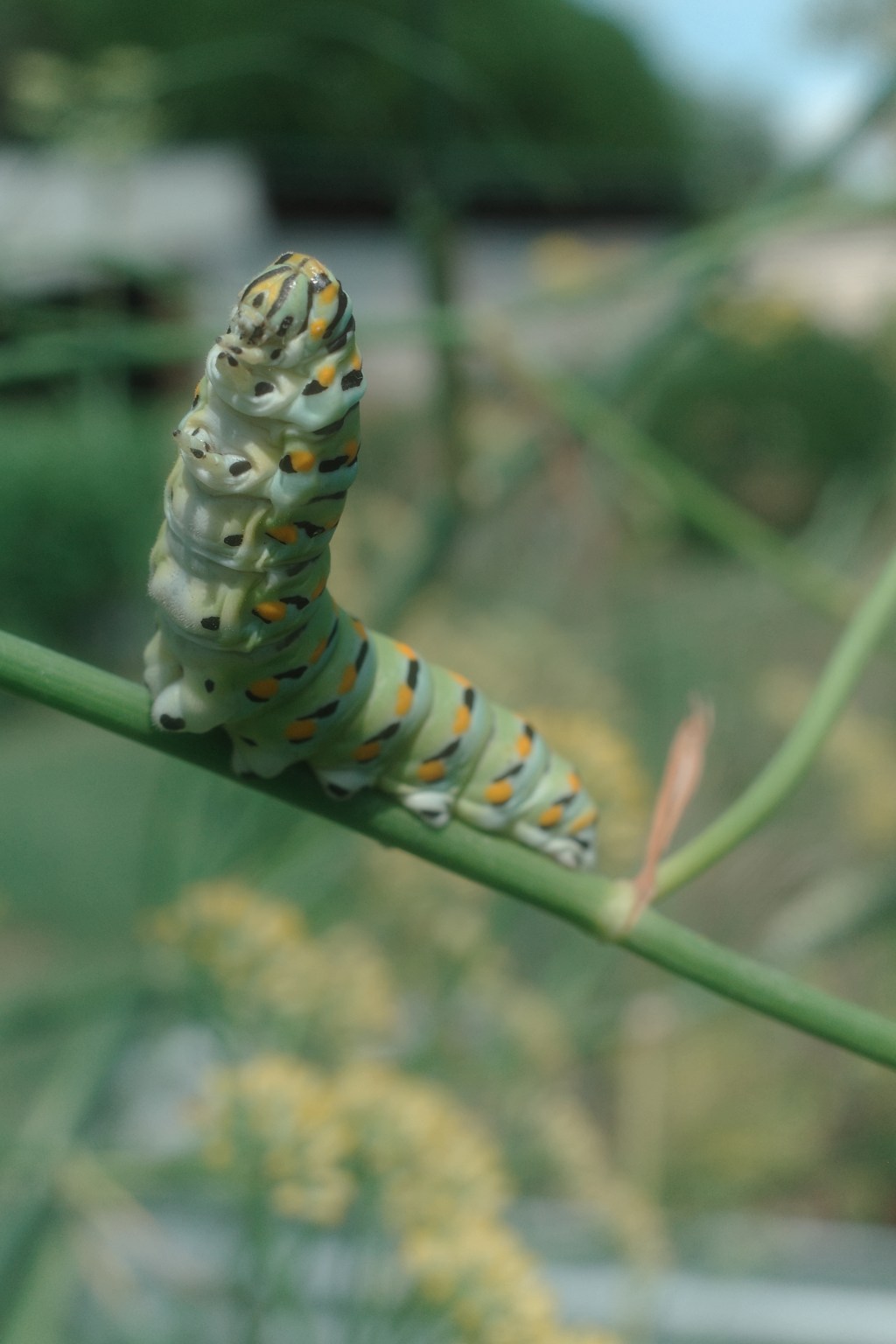
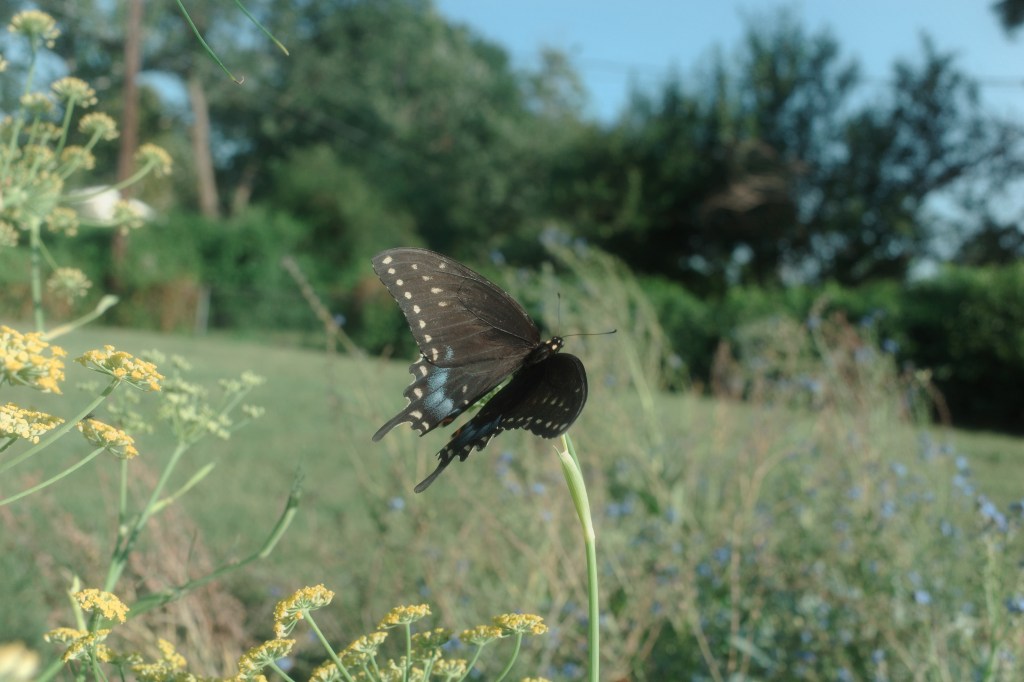
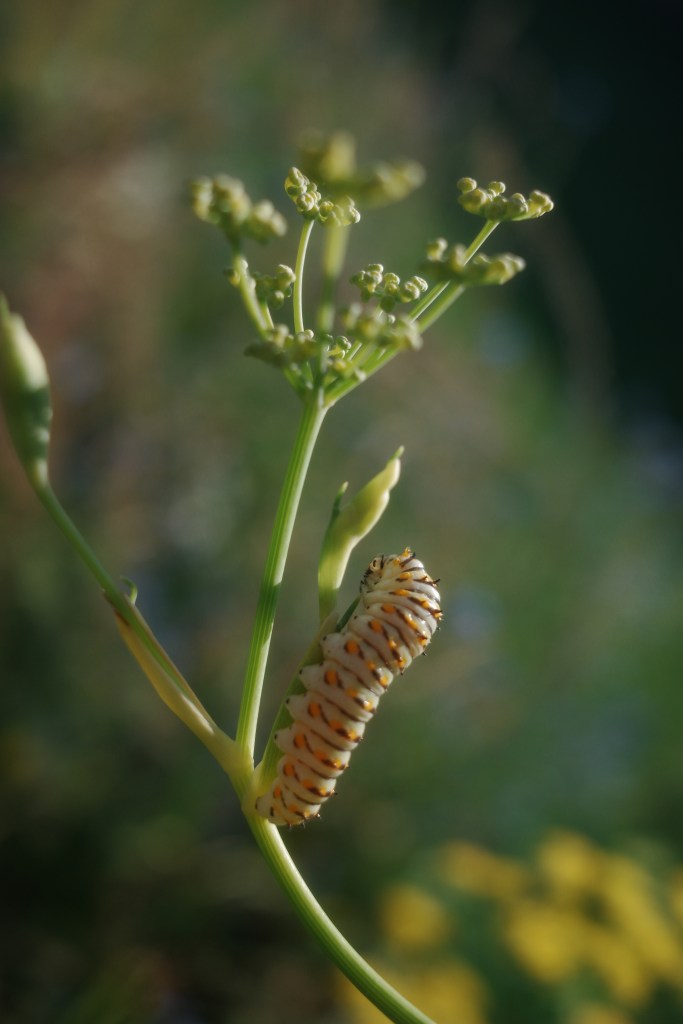
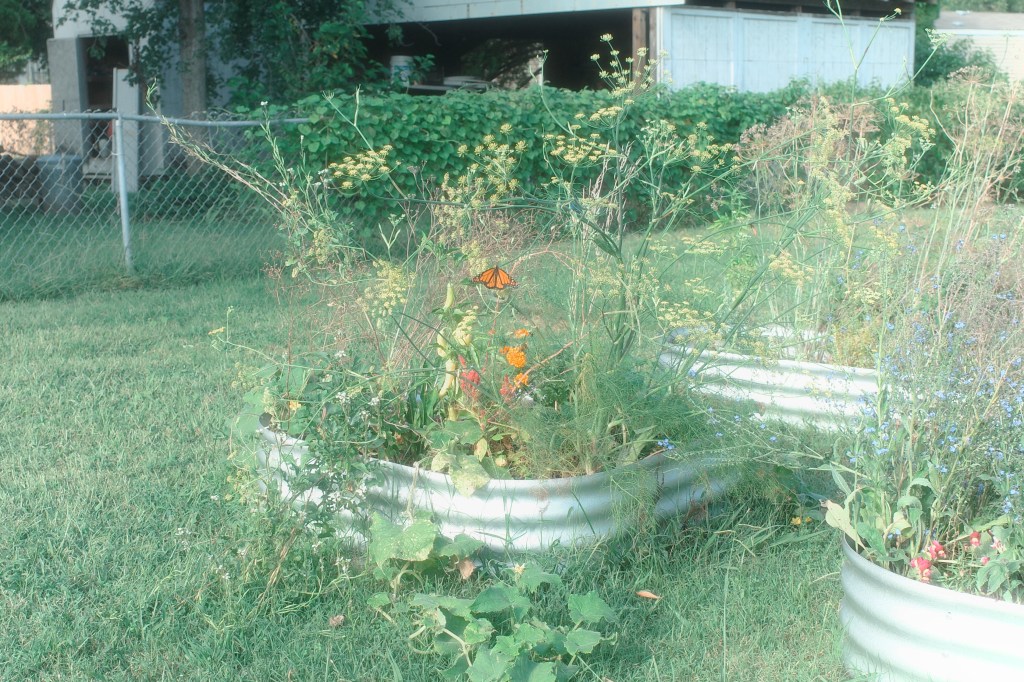
Caterpillars arrived as if to test that arrangement. At first my hand hovered between instinct and principle. I chose principle. They ate and grew huge and handsome. Then they vanished. A butterfly appeared, then another; then more caterpillars returned. By the time the second wave had finished, I was carrying peppers and cucumbers by the basketful, proof that abundance can arrive out of what looked like chaos.
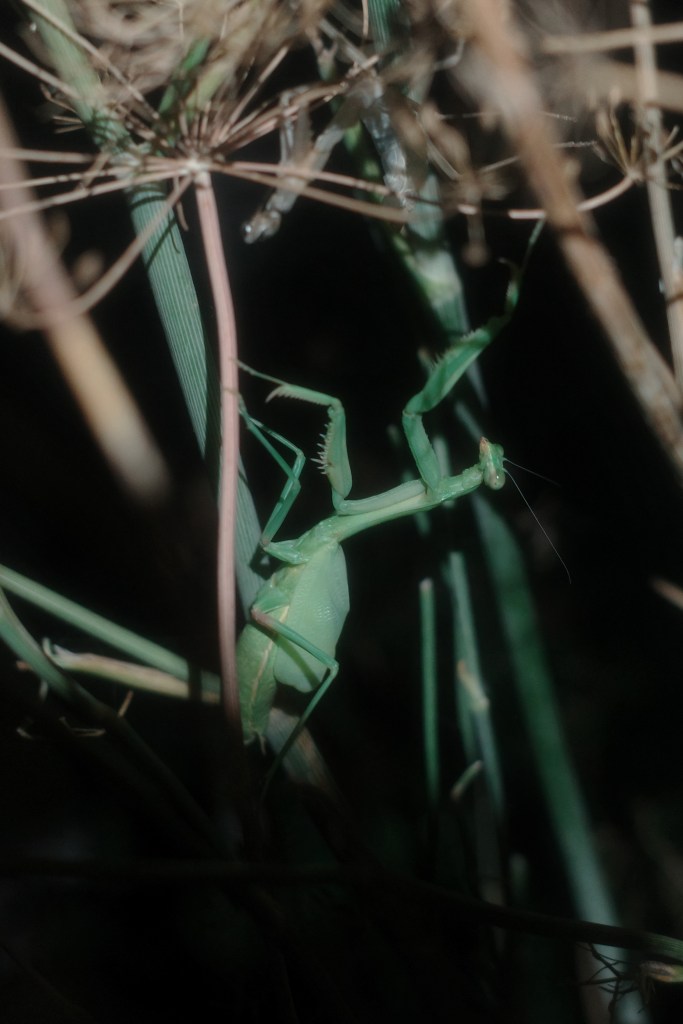
There is a rhythm to this life that is mostly small motions. I water the plants and the sun rises. I check where the caterpillars have chosen to feed for the day. I glimpse a mantis on the Brussels sprouts and try to catch a photograph that will always disappoint because the thing is alive in a way the photo cannot hold. Butterflies and hummingbirds visit like punctuation. In the evenings the yard fills with loud, careless noise, birds and bugs and the flicker of fireflies in the newly mowed grass. These are not theatrical revelations. They are the steady facts that teach me how to live through loss and return.
Spring will come again. Saying it aloud is not the same as believing it, and yet belief and fact here align. The garden keeps a calendar I can read if I am willing to look.
 K Burton
Leave a comment